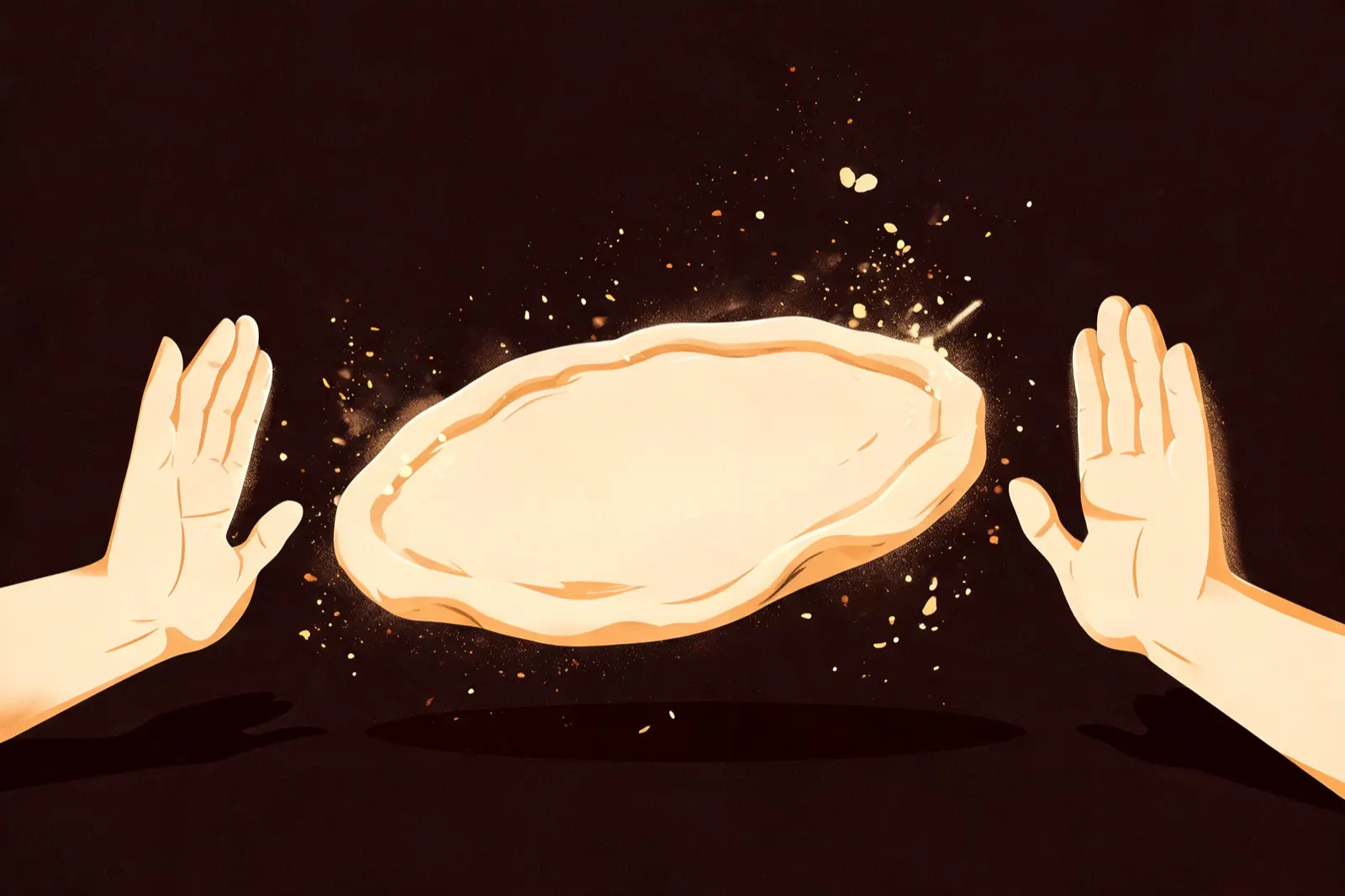
Hand-tossing stretches pizza dough with gravity and momentum instead of pressure. That matters because the dough spends hours building up gas during fermentation, and the toss thins it out while leaving most of that gas in place. A rolling pin does the opposite: it crushes the bubbles flat, and the crust bakes up dense.
That's the short answer. Here's what's actually happening up there, and why the person spinning dough behind the counter is doing more than putting on a show.
What fermentation puts into the dough
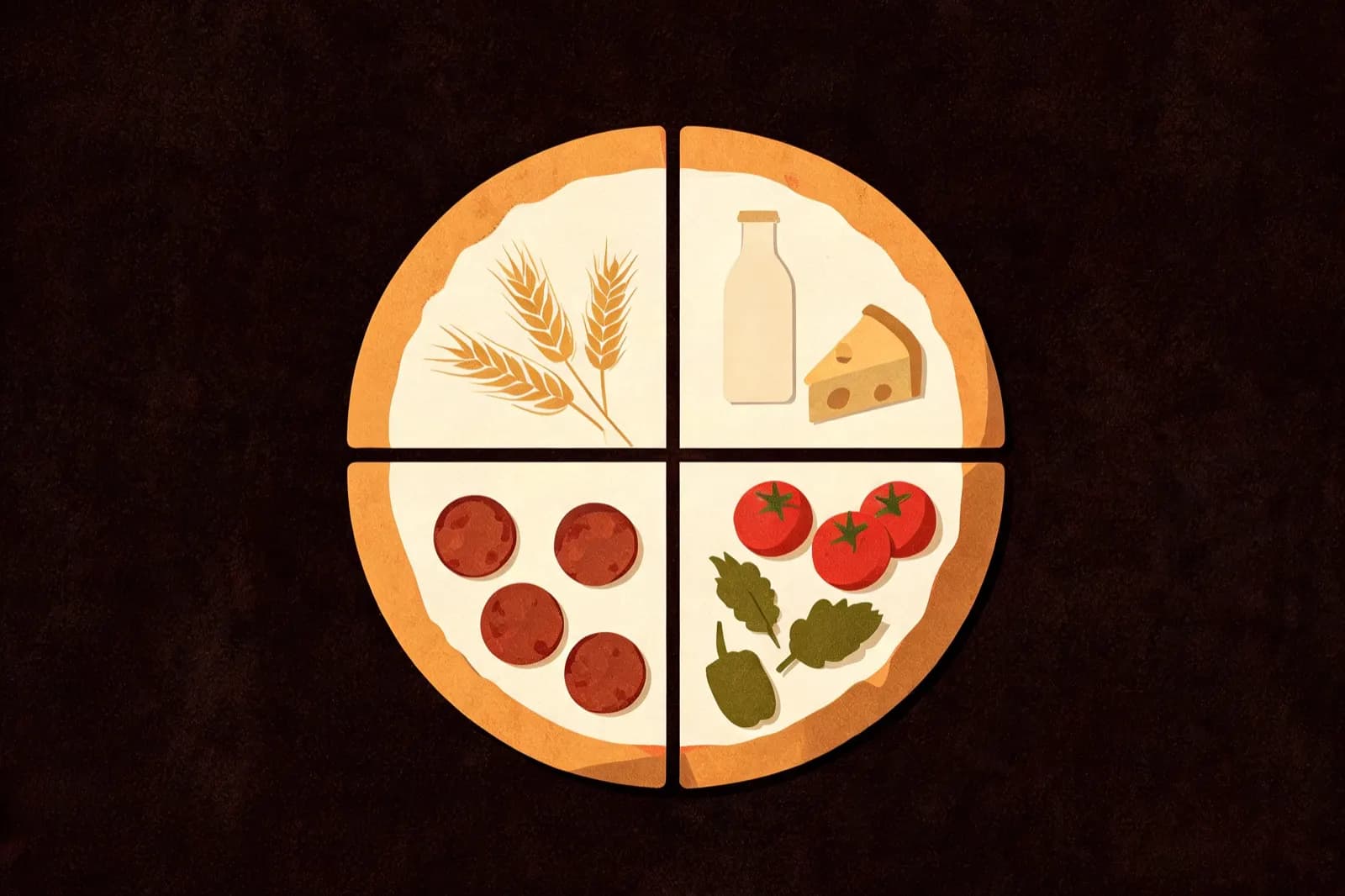
Pizza dough starts as flour, water, yeast, and salt. Mixing and kneading link the flour's proteins into gluten, a stretchy web that traps the carbon dioxide the yeast gives off. Give that dough time and it fills with thousands of small gas pockets, along with the flavor compounds slow fermentation produces.
Everything a pizza maker does after that point is a negotiation with the dough. Stretch it too fast and the gluten tears. Press it too hard and the gas escapes. The job is to get a thin, even center and an intact edge without wrecking hours of work in thirty seconds.
What the toss actually does
Spin a disc of dough in the air and momentum pulls it outward in every direction at once. Gravity thins the middle. The edges stretch under their own weight instead of under your thumbs. Three things come out of that:
- Even thickness. The dough stretches uniformly because the force on it is uniform. No thick lane down the middle where a rolling pin missed.
- The gas stays in. Nothing presses down on the dough, so the bubbles built during fermentation survive the shaping. In the oven they expand, and the crust puffs and blisters at the edge.
- The gluten relaxes instead of tearing. Brief, repeated stretching lets the gluten web lengthen gradually. Force it in one motion and it snaps back or rips.
Pizza makers call the outer rim the cornicione. It keeps the most gas of any part of the pie, which is why a hand-tossed crust bakes up with a puffed, airy edge and a thin middle that folds without cracking. That structure is the whole argument for NY-style pizza.
Hand-tossed vs pan vs rolled
Three ways to shape a crust. Three different pizzas.
Hand-tossed gives you the thin, foldable center and the open, chewy rim described above. Light where it should be light, structured where it needs to be.
Pan pizza goes a different direction on purpose. The dough is pressed into an oiled pan and often rises there before baking, so the crumb comes out thick and soft while the oil crisps the bottom into something close to fried. Chicago deep dish is the far end of the pan family: dough worked up the walls of a deep pan, then loaded with cheese, toppings, and sauce in that order. It's a casserole with ambition, and it takes about an hour to bake properly.
Rolled dough gets flattened under a pin. Fast, consistent, and it presses most of the gas right back out. The result is dense and cracker-like. There are styles where that's the goal, thin bar pizza among them. For a NY-style pie it's the wrong tool, the way a hammer is the wrong tool for a screw.
Why it takes practice
Because dough doesn't cooperate. It droops, sticks, springs back, and tears, and it behaves differently depending on how warm it is, how wet it is, and how long it's proofed. A new cook learns to read all of that through their hands before the toss ever looks smooth.
The technique itself has real rules. You work from the knuckles, not the fingertips, because fingertips punch holes. You keep the edge thicker than the center on purpose. You spin just enough to stretch, since every extra rotation is another chance to tear the middle thin as paper. Most people who learn it ruin a lot of dough first. That's the tuition.
The behind-the-back stuff you see in acrobatic competitions is its own sport, performed with dough nobody intends to eat. In a working kitchen the toss is quicker and quieter. It's shaping, done the way that protects the dough.
What this means when you order
Big Jim's runs a hand-tossed NY-style crust with house-made sauce and a fresh mozzarella blend, in five sizes: 12, 14, 16, 20, and 24 inches. Every one of them gets stretched by hand, including the 24-inch, which ships in a box that barely fits through a standard door. The menu starts at $11.99 for a 12-inch cheese, and every pie on it begins the same way: a fermented dough ball and a pair of hands.
Your oven lies to you. Ours doesn't get the chance.
FAQs
What does hand-tossing do to pizza dough?
It stretches the dough evenly using gravity and momentum instead of pressure, so the gas built up during fermentation stays in the dough. That trapped gas is what gives the baked crust its airy, chewy rim and thin center.
Is hand-tossed pizza better than rolled?
For a NY-style pie, yes. A rolling pin presses the fermentation gas out and the crust bakes dense and cracker-like, while a hand-tossed crust keeps its bubbles and comes out light, chewy, and foldable.
What is the difference between hand-tossed and pan pizza?
Hand-tossed dough is stretched in the air and baked thin, with an open rim. Pan pizza dough is pressed into an oiled pan and often rises there, so it bakes thicker and softer with a crisp, almost fried bottom.
Why do pizza makers throw dough in the air?
Spinning stretches the dough outward in every direction at once, which thins the center evenly and relaxes the gluten without tearing it. The showmanship is a side effect.