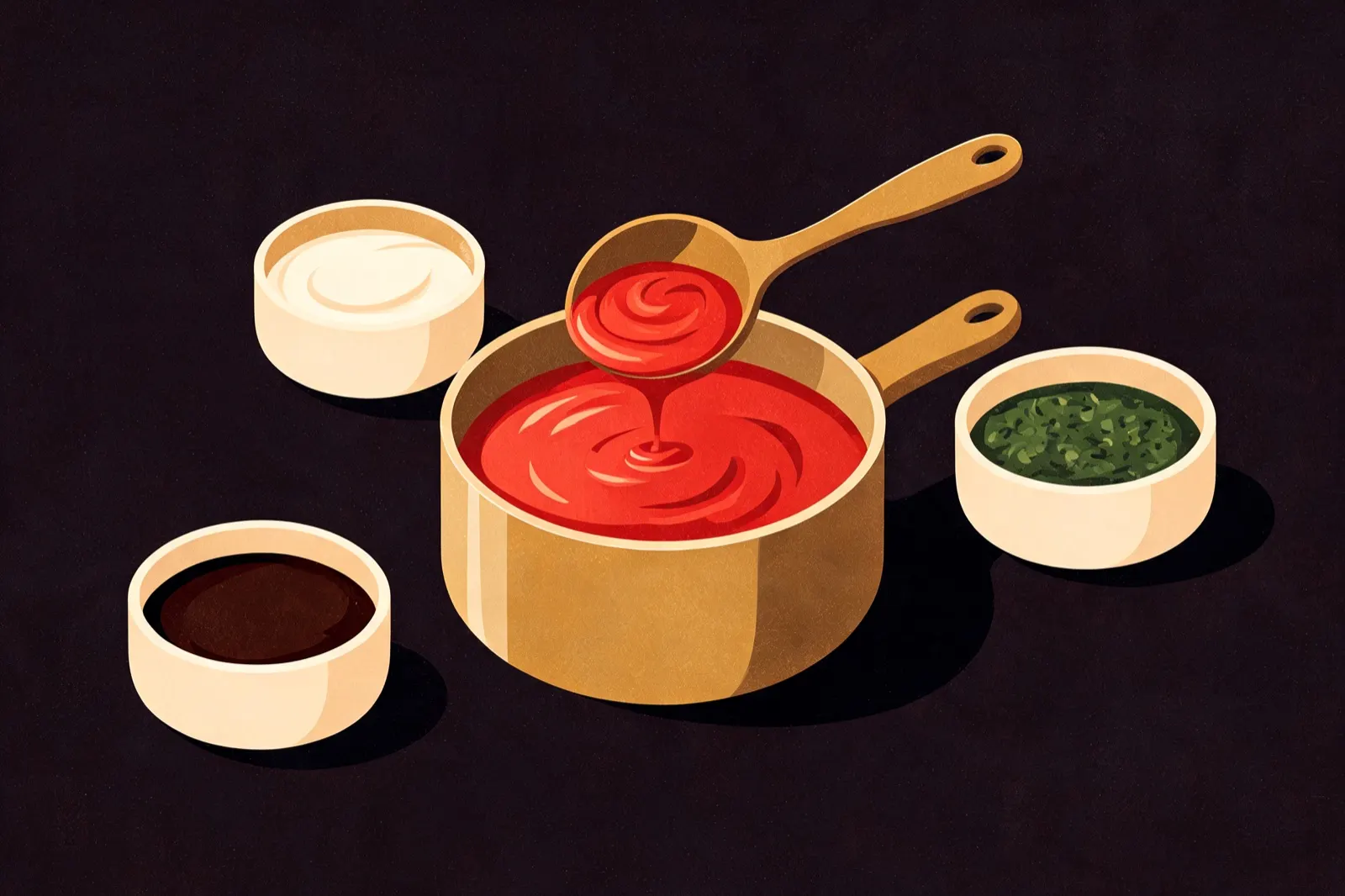
Pizza sauce and spaghetti sauce are not the same thing, and the difference explains most of what separates a good pizza from a soggy one. Pizza sauce is usually uncooked before it hits the oven — crushed tomatoes, salt, maybe garlic and oregano — because it finishes cooking on the pie. Marinara and other pasta sauces are simmered first, which makes them sweeter, looser, and wetter than a crust wants to carry.
That is the short answer. The longer answer is that sauce is a decision, and every style of pizza makes it differently.
Classic red: the uncooked tomato sauce
The backbone of New York style. Crushed or milled tomatoes, seasoned simply, spread thin. Because it goes on raw, it keeps a bright, fresh-tomato edge after the bake instead of tasting like Tuesday's leftovers. A good red sauce should taste like tomatoes first and the spice rack second. Ours is made in house and spread with restraint, because the crust and the cheese are doing half the work on a hand-tossed pie.
Cooked marinara: the deep dish move
Deep dish flips the logic. The sauce goes on top of the cheese and rides through a long bake, so it starts chunkier and heartier — closer to a stewed tomato sauce than a bright pizza red. It has to hold its own above a pound of mozzarella. That is why a real Chicago deep dish tastes layered instead of blended: crust, then cheese, then tomatoes that still act like tomatoes.
White sauces: alfredo and ranch
Skip the tomato entirely. An alfredo base turns a pizza rich and quiet — it is the right floor under chicken and bacon, which is exactly where our Chicken Alfredo pizza puts it. Ranch as a base is a Texas Panhandle inevitability, and it works for the same reason ranch works on everything: fat, acid, herbs. These sauces burn easier than red, so they belong under toppings, never boiled down.
BBQ sauce
Sweet, smoky, and loud. BBQ base works when the toppings can argue back — chicken, red onion, cheddar. It fails under delicate toppings, which is why nobody has ever ordered a BBQ margherita twice.
Pesto
Basil, garlic, olive oil, pine nuts or a stand-in, blitzed. Pesto is potent, so it shows up best in supporting roles — swirled after the bake, or stuffed somewhere it can steam instead of scorch, like the kale pesto inside our mozzarella rolls.
The oddballs that earn their spot
Cream cheese under jalapeños and bacon. Refried beans under taco toppings. Sour cream under green chiles. These sound like dares and eat like ideas — a cream-cheese base is the entire reason a jalapeño popper pizza tastes like the appetizer it is named after. The rule: the base has to bind the toppings, not compete with them.
How to pick
Match the sauce to the weight of the toppings. Light toppings, bright red sauce. Heavy meats, a sturdier cooked sauce or a white base. Big flavors like BBQ or taco need a base from the same family. And when a menu offers a drizzle — ranch, BBQ, hot sauce — that is a finishing move, applied after the oven so it stays itself.
Or skip the theory, look at the menu, and notice that every pizza on it already made this decision for you. That is the kitchen's job. Yours is picking a size — and with five of them up to 24 inches, that is the harder call.
FAQs
Is pizza sauce the same as spaghetti sauce?
No. Pizza sauce is typically uncooked before baking so it finishes on the pie and stays bright; pasta sauces are simmered first, making them sweeter and wetter than a crust wants to carry.
Why does deep dish pizza put the sauce on top?
The long bake would scorch cheese left on top, so deep dish layers cheese first and a chunky cooked tomato sauce above it, where it can ride out the oven.
What is the best sauce for a white pizza?
An alfredo base is the classic — rich and quiet under chicken and bacon. Ranch bases work on the same logic: fat, acid, and herbs.
When should a sauce be a drizzle instead of a base?
When it would burn or take over in the oven. Drizzles like BBQ, ranch, or hot sauce go on after the bake as a finishing flavor.